Analog circuits for graph problems
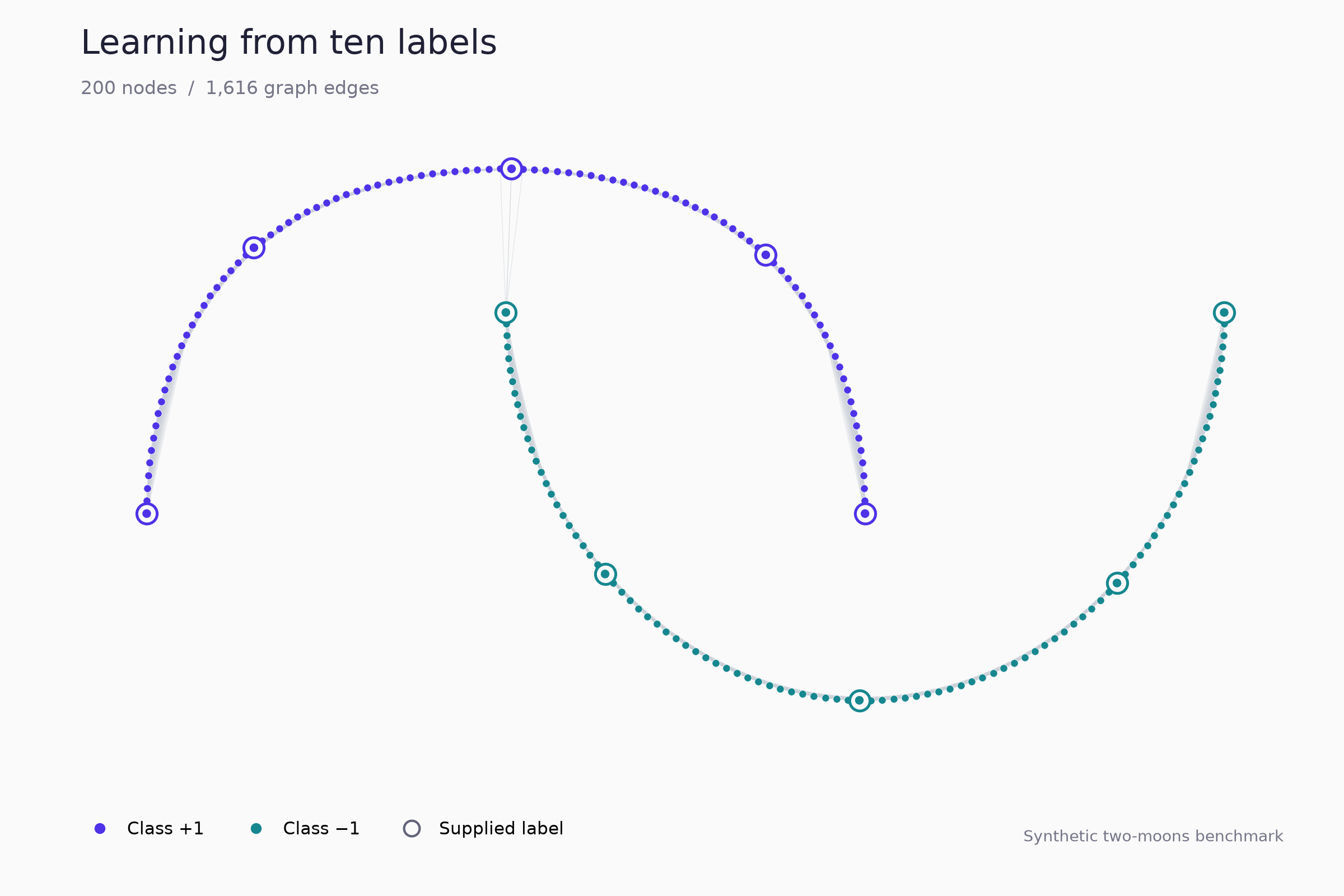
Circuit simulations of graph-based classification and signal smoothing, with a closer look at settling time and numerical error.
Read the study Sumer Analog
 studies circuits that solve mathematical problems. Our research examines how their design affects accuracy, settling time, and practical implementation.
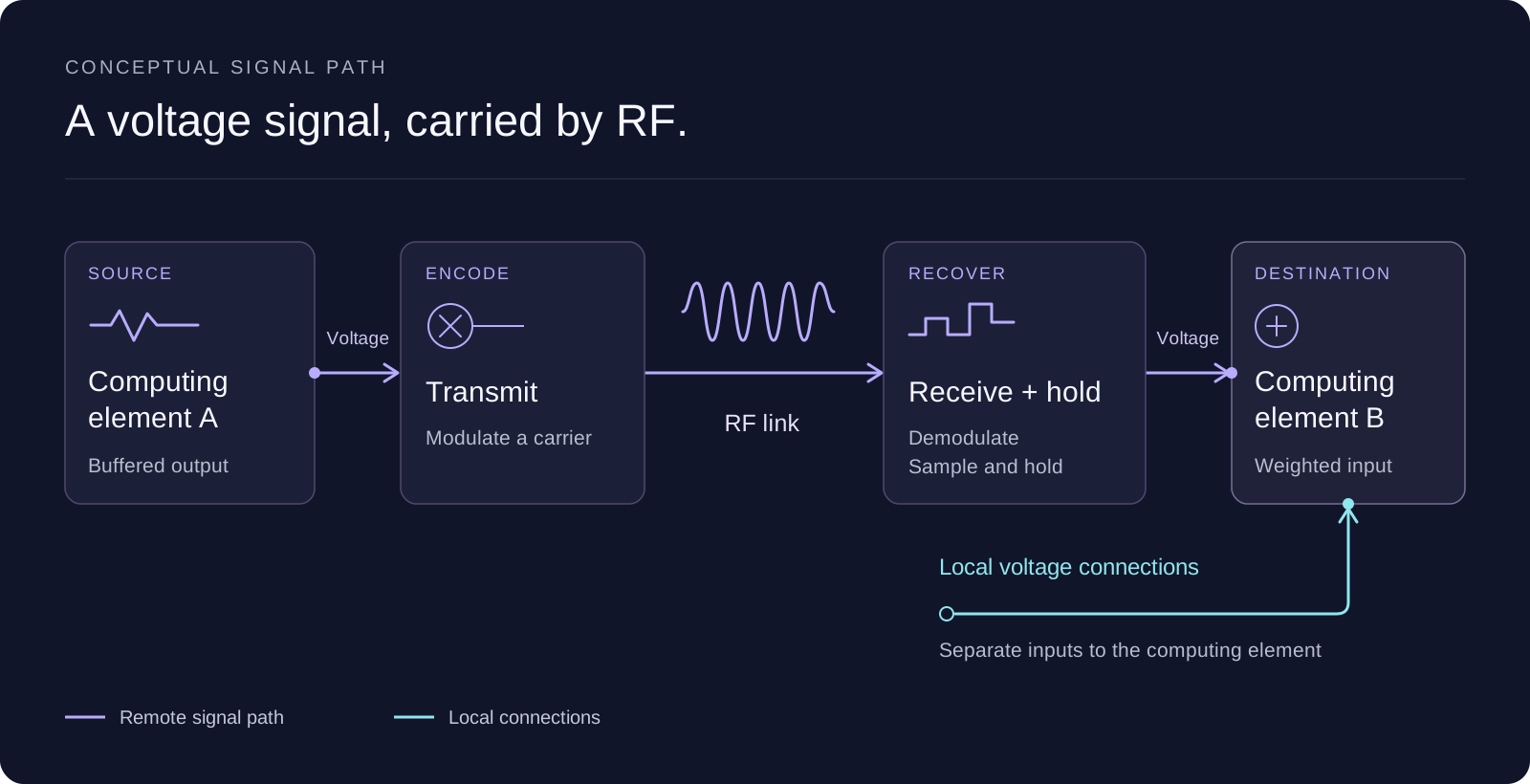
Explore our researchAnalog computing elements need ways to exchange signals. We study RF connections that carry voltages between elements and feed those signals into the computation.
Explore RF coupling
Circuit simulations of graph-based classification and signal smoothing, with a closer look at settling time and numerical error.
Read the studyExploring radio-frequency connections between analog computing elements and their role in carrying signals through a computational network.
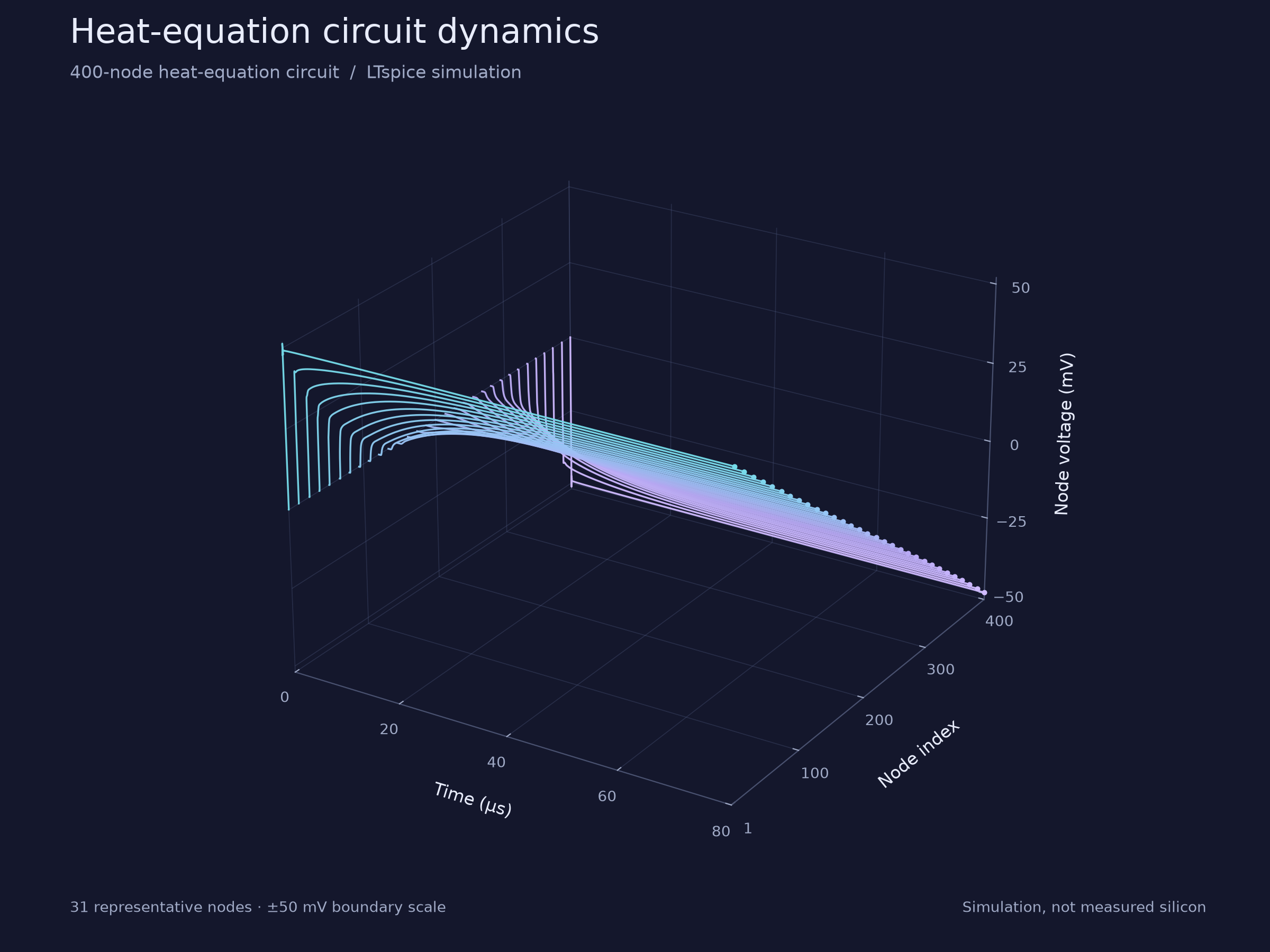
Read the studyStudying how CMOS buffers and programmable conductances affect the dynamics and accuracy of analog linear solvers, with applications to physical conservation laws such as heat conduction.
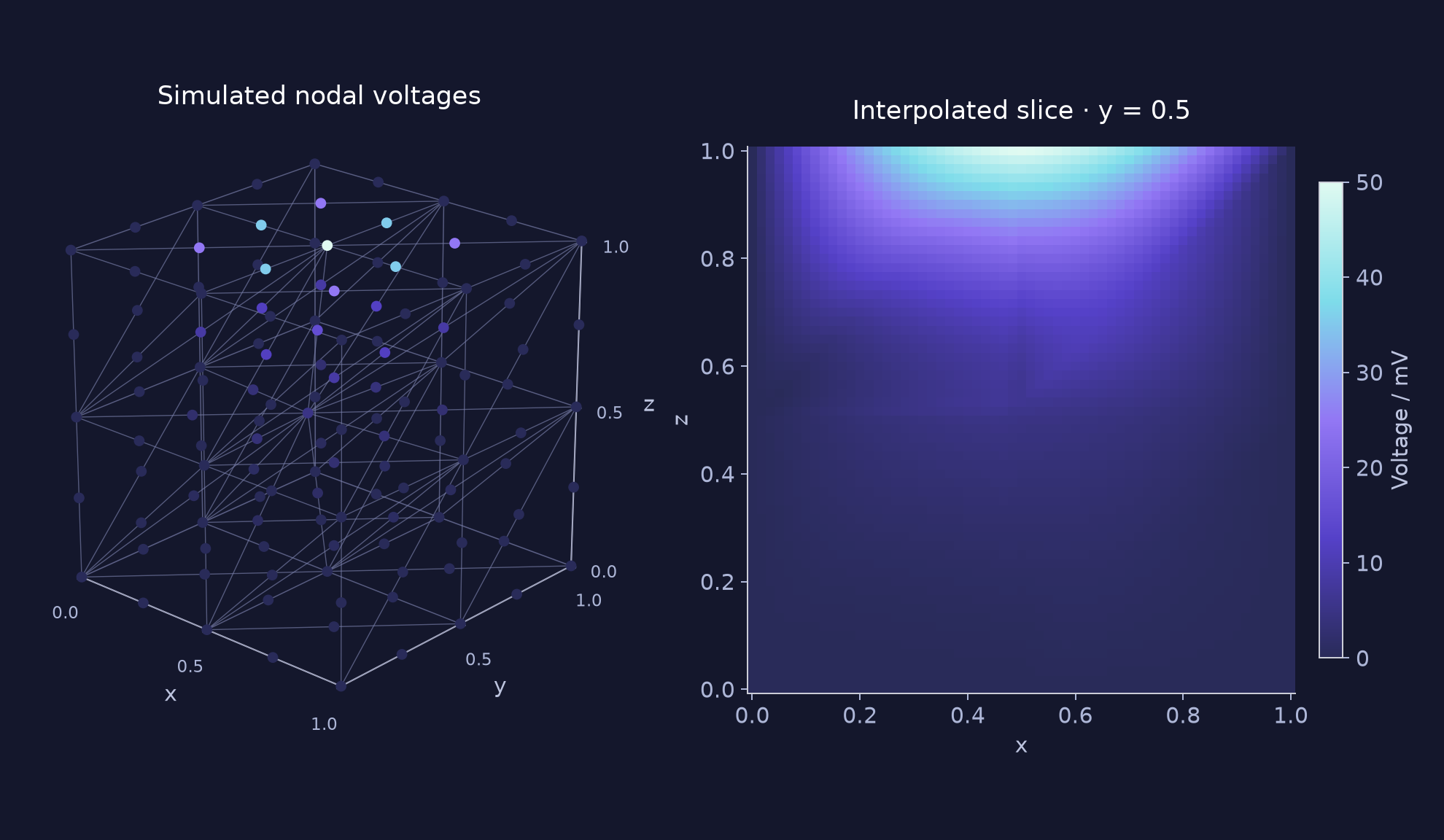
Read the studyDeveloping circuits with programmable conductances for discretized conservation laws, using Laplace’s equation as an elliptic test case.
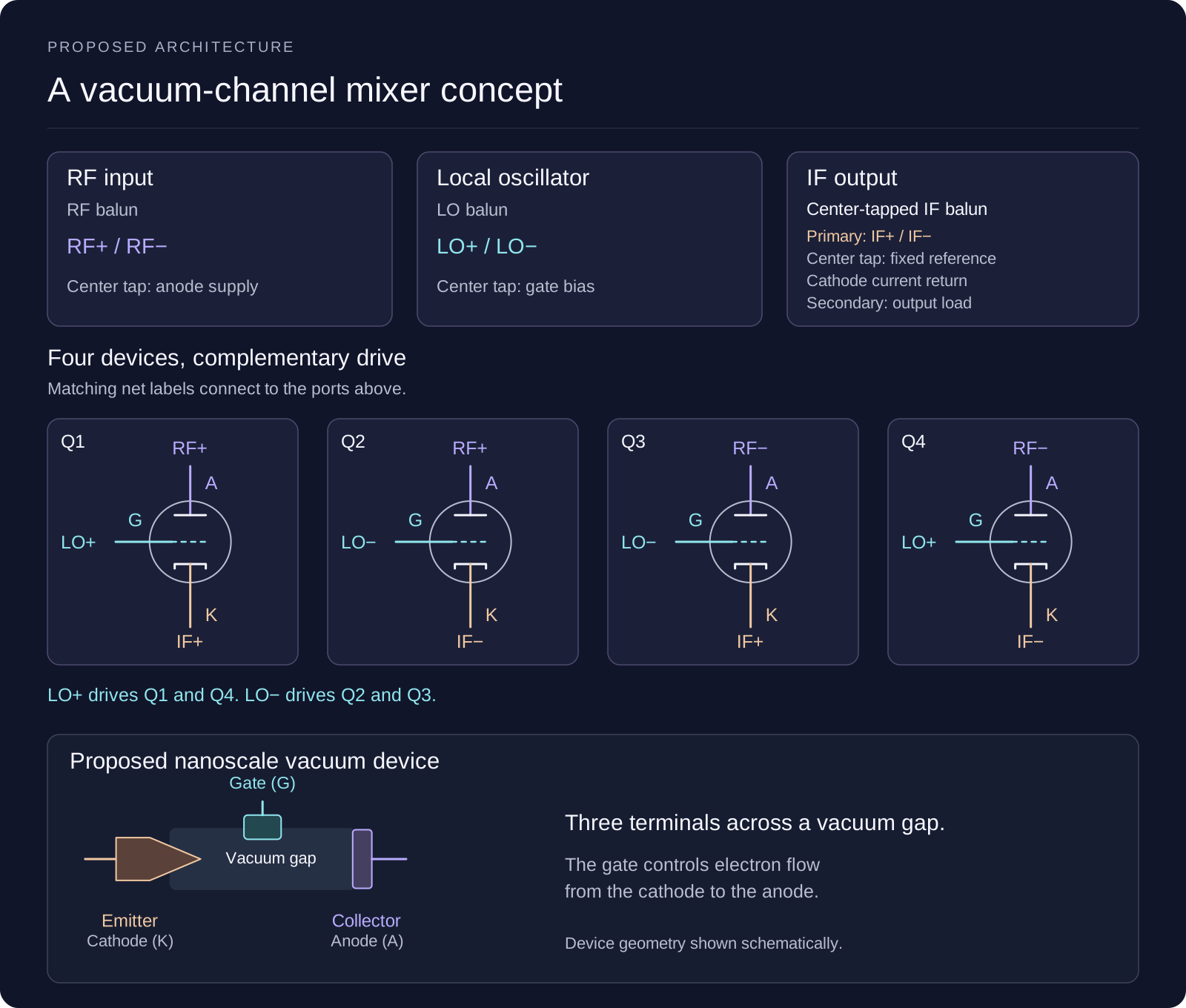
Read the studyAnalytical relations for understanding and tuning balanced mixers in RF receivers.
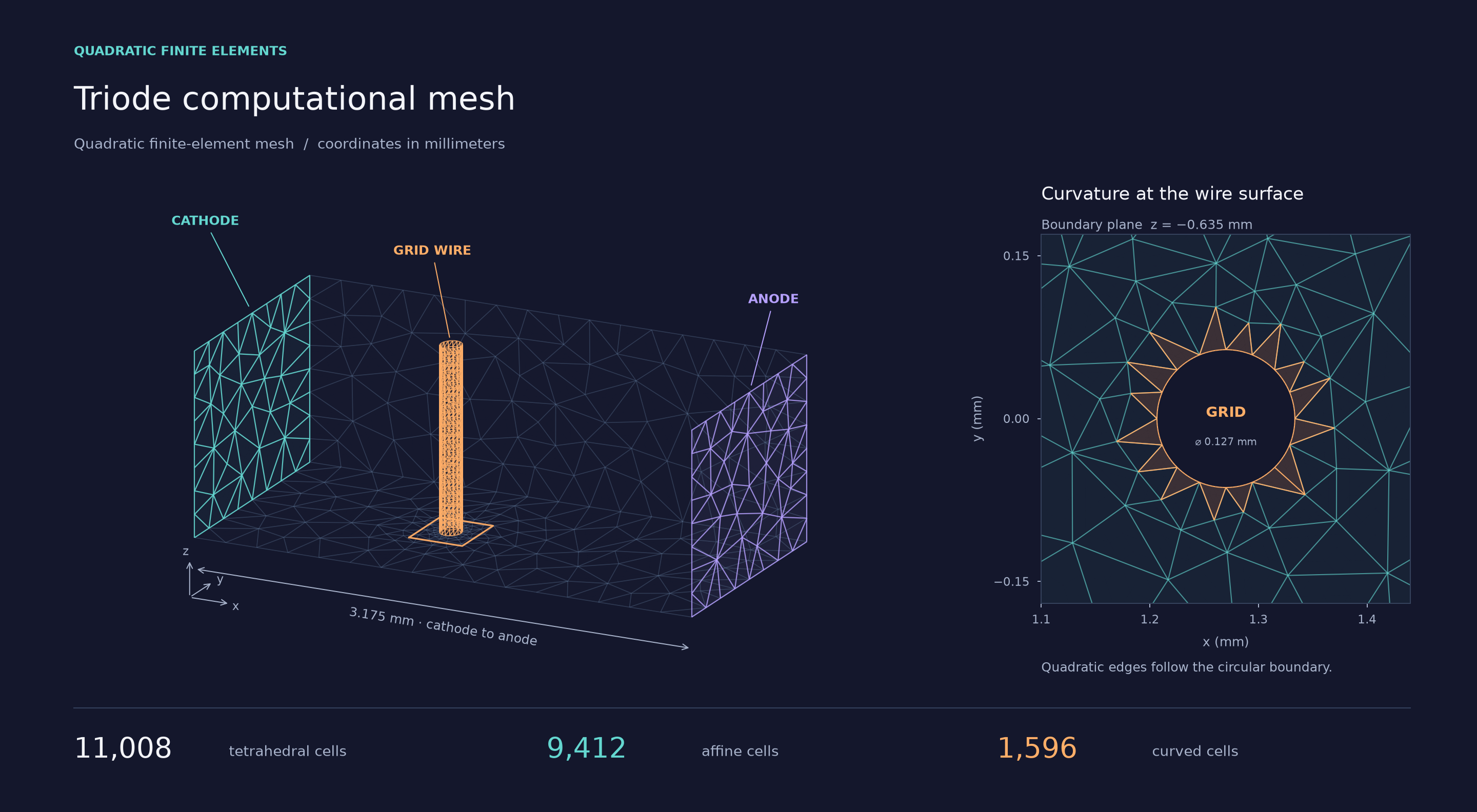
Read the studyDeveloping accurate analytical methods for electron trajectories in quadratic fields, accounting for curved geometry and element-boundary crossings.
Read the studyA useful analog solver depends on both its mathematical formulation and the devices that implement it. We study that connection through analysis, circuit simulation, and comparisons with numerical reference solutions.
We work on analog computing, radio-frequency circuits, and numerical models of physical systems. Our current studies range from feedback networks for linear algebra to mixer design and electron tracking in finite-element fields.
Read the public preprint